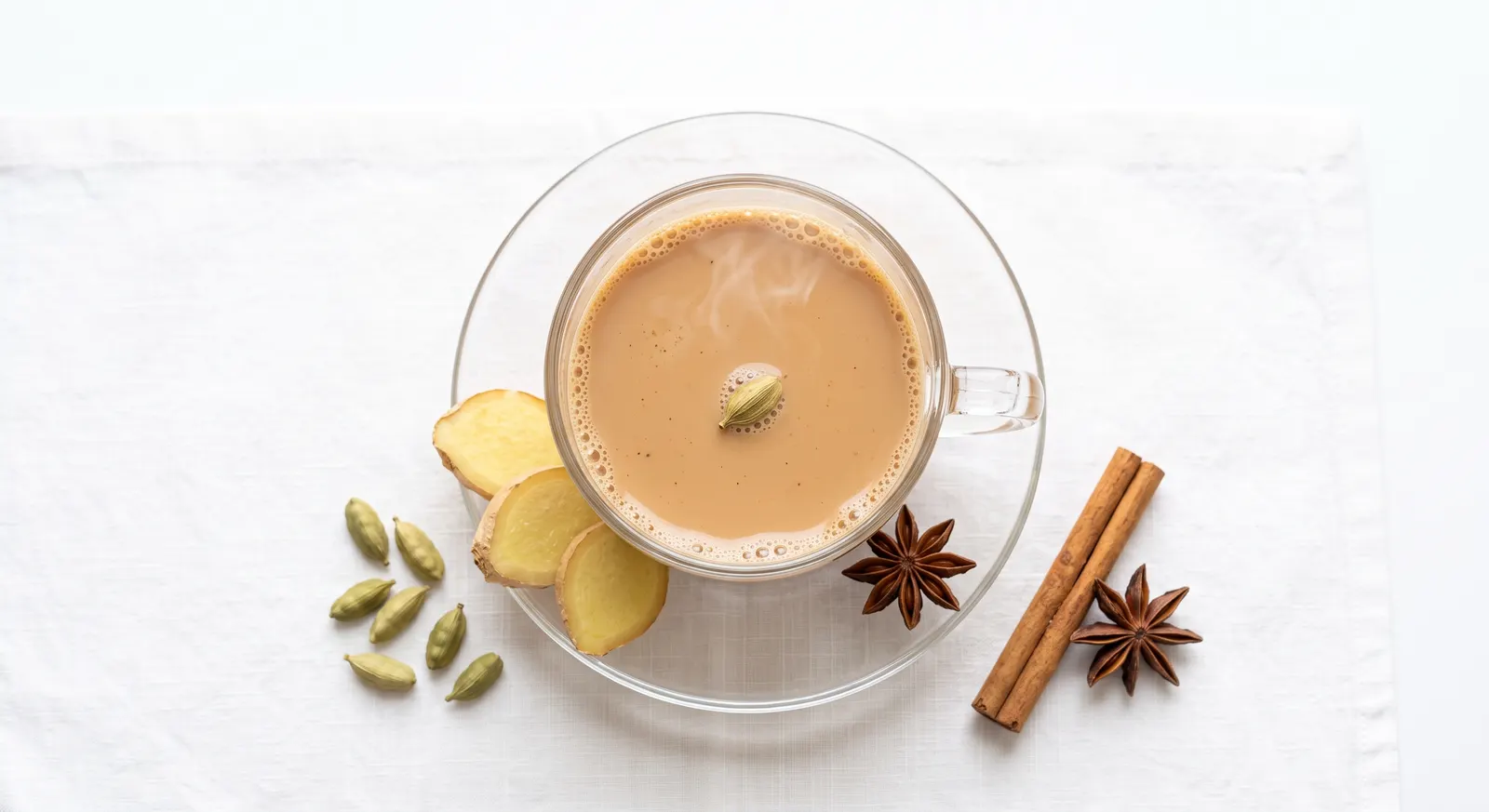
Masala Chai
Tea boiled with milk, sugar and whole spices — not tea with milk added.
- Prep
- 5 min
- Cook
- 12 min
- Total
- 17 min
- Serves
- 2
- Heat
- Not spicy
What Masala Chai is
Masala chai is made by boiling tea leaves, milk, sugar and crushed spices together, rather than brewing tea and adding milk afterwards. Boiling is what extracts the spice and gives the drink its body. The result is strong, sweet and thick enough to coat the cup.
Where it comes from
Tea was grown in Assam for export long before most Indians drank it; the domestic habit was built in the early twentieth century, and cooks adapted it by boiling it with milk and the spices already in the kitchen. Every family and every roadside stall has its own ratio, and the argument about whether ginger or cardamom should lead is genuinely regional.
How to eat it
Drink it hot and fairly quickly — chai is not a drink to nurse, and it forms a skin as it cools. It is taken at any hour, usually with something fried or a biscuit, and is offered to any visitor almost automatically. If you want it less sweet, say so before it is made: the sugar is boiled in, not added at the table. In Nepal the equivalent is chiya, often made with more ginger and less cardamom.
Goes well with
- Samosa or pakora
- Biscuits for dunking
- Anything fried and salty
Ingredients
- 250 ml Water
- 250 ml Full-fat milk — Full fat; low-fat chai tastes thin.
- 2 tsp Strong black tea, preferably CTC Assam — CTC grain stands up to boiling; delicate leaf turns bitter.
- 2 cm piece Fresh ginger, crushed
- 4 pods Green cardamom, crushed
- 1 small piece Cinnamon stick
- 2 Cloves
- 2 Black peppercorns — Optional; common in winter and in Nepali chiya.
- 2 to 3 tsp Sugar
Spices in this dish
How to cook it
1Crush the whole spices coarsely
Bruise the cardamom, cinnamon, cloves and pepper in a mortar. Ground spice powder makes the chai muddy and slightly gritty; coarse pieces release flavour cleanly and strain out.
2Boil the spices in water first
Bring the water, crushed spices and ginger to a boil and let them go for three or four minutes before anything else joins them. Spices need water and time; added later with the milk they never fully infuse.
3Add the tea and boil hard
Add the tea leaves and boil for two minutes until the liquid is very dark. This is deliberate over-extraction — the milk will dilute it back.
4Add milk and sugar, then bring it up three times
Pour in the milk and sugar and bring it to the point of rising up the pan, pull it off, and let it settle. Repeat twice more. Each rise thickens the chai; a single boil gives a thinner drink.
5Pull it to aerate
Pour it between two vessels from a height a few times. This cools it to drinking temperature and gives the light foam on top that a stall chai always has.
6Strain into small cups
Strain and serve in small glasses or cups. Chai is drunk in modest quantities, hot, and refilled — not in a mug.
Calories and nutrition
Per serving — 1 cup (about 220 ml)
| Calories | 130 kcal |
|---|---|
| Protein | 4 g |
| Carbohydrate | 18 g |
| Fat | 4 g |
| Fibre | 0 g |
| Sodium | 55 mg |
Approximate values for a typical restaurant portion, calculated from standard ingredient tables. Actual figures vary with the kitchen, the oil used and the portion served. Not intended as medical or dietary advice.
Where to eat Masala Chai
- NEPALICO Shibuya Ten — Tokyo
- AANGAN — Tokyo
- KHUMBILA — Tokyo
- Sekuwagaru — Tokyo
- Nepali Banshagaru Indian Curry Sakura — Tokyo
- Isora Shinjuku Higashiguchi Ten — Tokyo
- asian dining Hotpot — Tokyo
- Spice Land Tokyo — Tokyo
- Curry House Himalaya — Tokyo
- Namaste Tokyo — Tokyo
- Dal Bhat Shibuya — Tokyo
- Momo Paradise — Tokyo