Lamb Curry
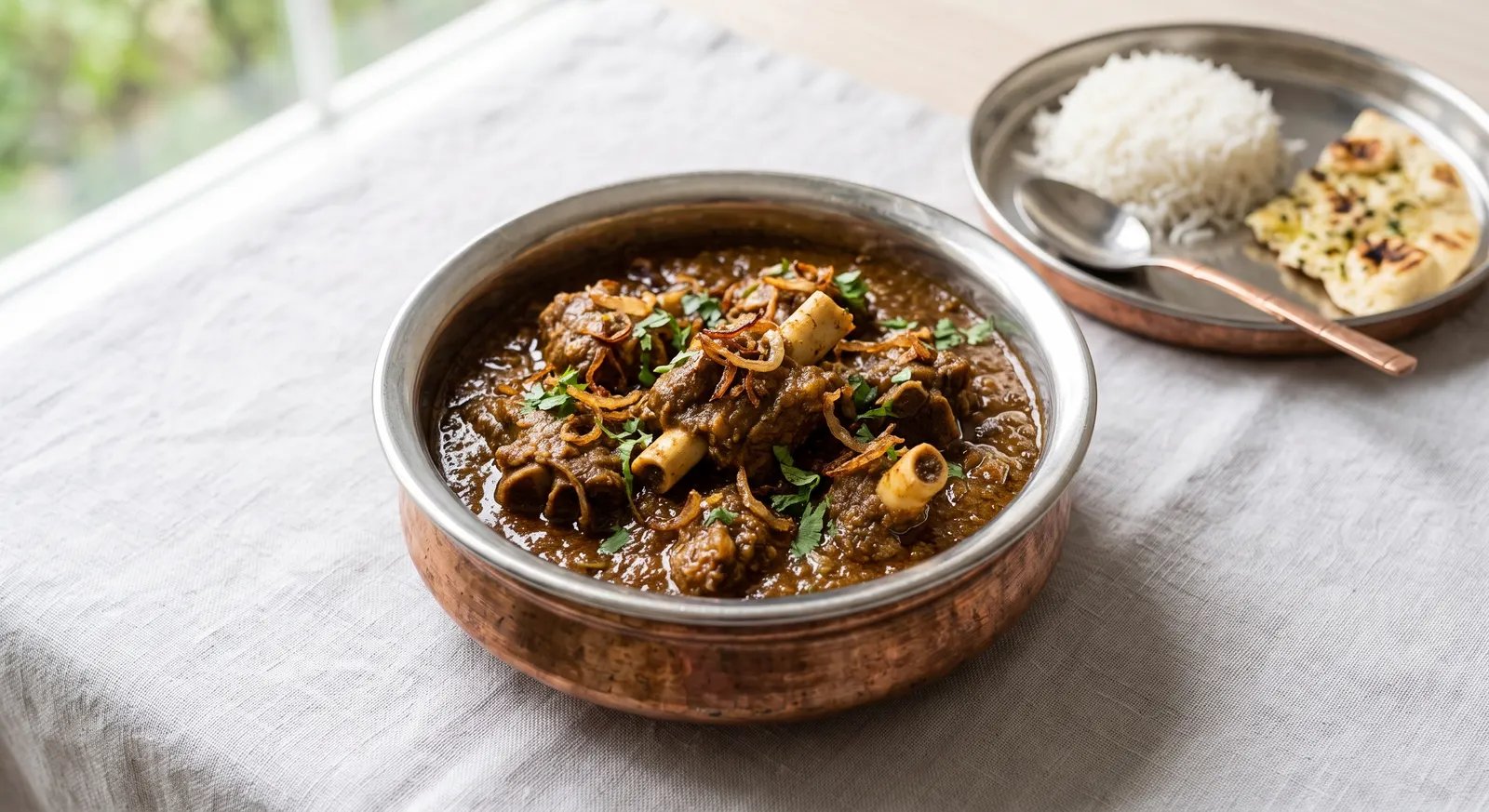
Bone-in lamb cooked slowly until the sauce thickens around it.
- Prep
- 20 min
- Cook
- 130 min
- Total
- 150 min
- Serves
- 5
- Heat
- Medium
What Lamb Curry is
A dark, slow-cooked curry built on browned onions, ginger, garlic and whole spices, with bone-in lamb simmered until it gives way. The gravy is thicker and less oily than a chicken curry because it reduces for far longer, drawing body from the bones rather than from cream.
Where it comes from
Slow-cooked mutton curries run through the whole subcontinent under many names, and in Nepali and North Indian kitchens the method is broadly shared: brown the onion properly, bloom whole spices in fat, then give the meat the time it needs. Goat is the traditional meat across much of the region; lamb is the common substitute where goat is harder to buy, including in Japan.
How to eat it
Bone-in curry is eaten slowly and with your hands where that is the custom — the bones are part of it, and the marrow is considered the best portion. Use rice rather than bread if the gravy is thin, bread if it has reduced thick. Take one piece at a time onto your plate rather than serving yourself the whole bowl at once; the dish is meant to be shared across a table.
Goes well with
- Plain basmati rice
- Naan or roti
- Sliced raw onion with lemon
Ingredients
- 1 kg Bone-in lamb shoulder or leg, cut into chunks — Bone-in — the marrow is what thickens the gravy.
- 3 large Onions, thinly sliced
- 3 tbsp Ginger-garlic paste
- 3 medium Tomatoes, chopped
- 150 g Yoghurt
- 1 stick, 4 pods, 4 cloves, 2 leaves Cinnamon stick, green cardamom, cloves, bay leaf
- 1 tsp Cumin seeds
- 2 tbsp Coriander powder
- 1 tsp Turmeric
- 1 to 2 tsp Chilli powder
- 1 tsp Garam masala — At the end, not the start.
- 4 tbsp Mustard oil or ghee
Spices in this dish
How to cook it
1Brown the onions properly
Fry the sliced onions in the oil over medium heat for fifteen to twenty minutes until genuinely deep brown, not merely golden. This is the longest and most important step; the colour and sweetness of the finished gravy come almost entirely from here.
2Bloom the whole spices
Push the onions aside, add the cinnamon, cardamom, cloves, bay and cumin to the hot fat and let them sizzle for thirty seconds until fragrant.
3Seal the lamb
Raise the heat, add the lamb and ginger-garlic paste, and stir until the meat is browned on all sides and no raw garlic smell remains.
4Add tomato, yoghurt and ground spices
Stir in the tomatoes, coriander, turmeric and chilli, then the yoghurt a spoonful at a time off the heat so it does not split. Cook until the fat separates and pools at the edges — that visual cue means the masala is done.
5Simmer low and long
Add just enough hot water to half-cover the meat, cover, and simmer on the lowest heat for ninety minutes to two hours. Lamb on the bone will not shortcut; at sixty minutes it is usually still tough.
6Reduce and finish
Uncover, raise the heat and reduce until the gravy clings to the meat. Stir in the garam masala, rest for ten minutes off the heat, and serve.
Calories and nutrition
Per serving — 1 portion with rice (about 420 g)
| Calories | 690 kcal |
|---|---|
| Protein | 45 g |
| Carbohydrate | 38 g |
| Fat | 38 g |
| Fibre | 5 g |
| Sodium | 1050 mg |
Approximate values for a typical restaurant portion, calculated from standard ingredient tables. Actual figures vary with the kitchen, the oil used and the portion served. Not intended as medical or dietary advice.
Where to eat Lamb Curry
- NEPALICO Shibuya Ten — Tokyo
- AANGAN — Tokyo
- KHUMBILA — Tokyo
- Sekuwagaru — Tokyo
- Nepali Banshagaru Indian Curry Sakura — Tokyo
- Isora Shinjuku Higashiguchi Ten — Tokyo
- asian dining Hotpot — Tokyo
- Spice Land Tokyo — Tokyo
- Curry House Himalaya — Tokyo
- Namaste Tokyo — Tokyo
- Dal Bhat Shibuya — Tokyo
- Momo Paradise — Tokyo