South Indian food
Rice, lentils and fermentation — a lighter, sourer tradition with almost no relation to a North Indian menu.
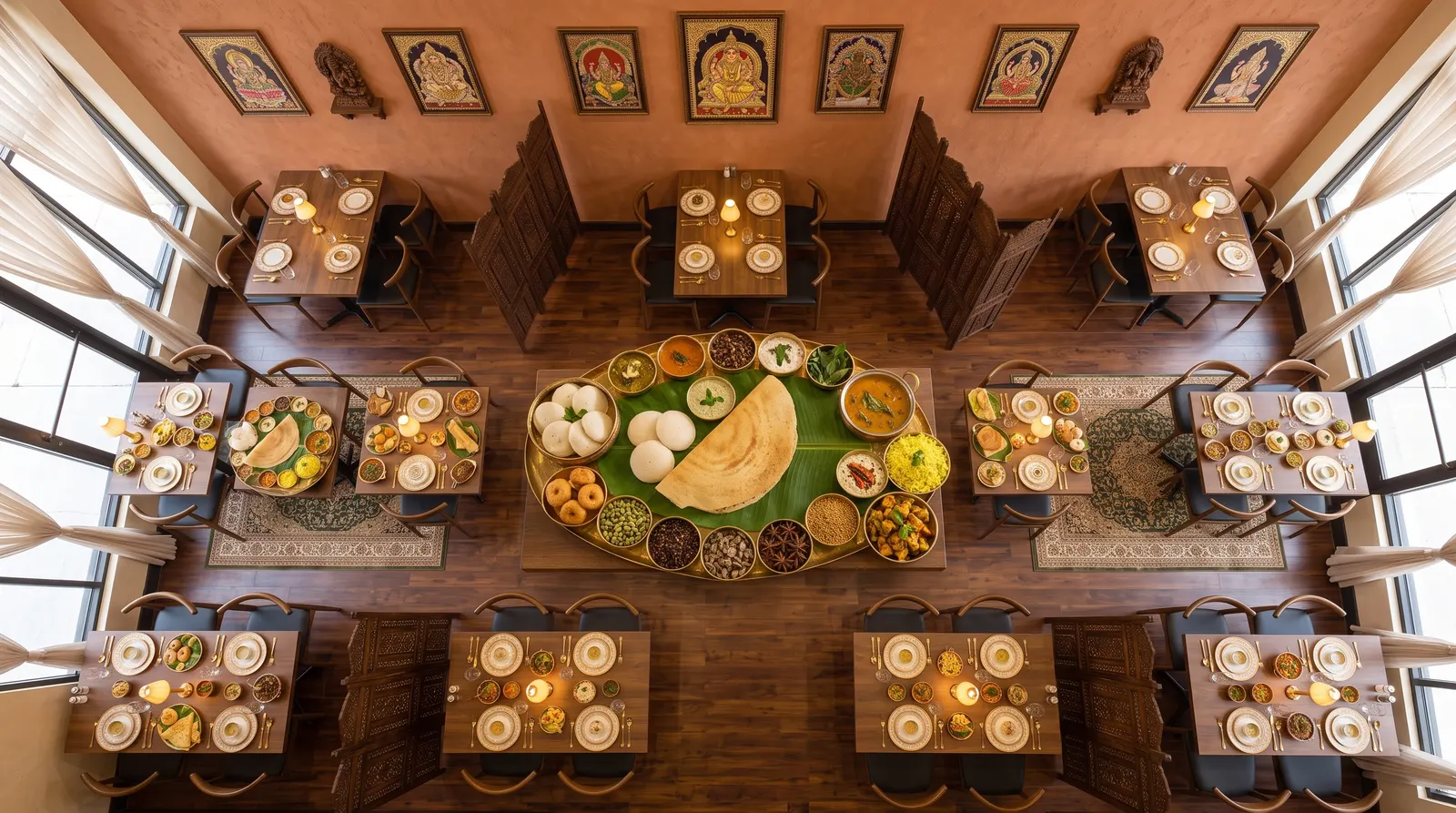
What South Indian food is
South Indian cooking is built on rice and lentils rather than wheat and dairy, and on fermentation rather than slow-browned onion. Dosa, idli and vada all start from a batter left to ferment overnight. Coconut, curry leaf, mustard seed and tamarind do the work that cream and garam masala do further north, and the result is lighter, sharper and often vegetarian by default.
What defines it
Fermentation and tempering. A dosa batter of rice and urad dal is left overnight, and the sourness that develops is the flavour — a same-day batter makes a pancake, not a dosa. Then tempering: mustard seeds popped in hot oil with curry leaves and dried chilli, poured over at the end. Both techniques are about transformation rather than richness, which is why the food can be eaten daily in a way a butter chicken cannot.
How a meal works
Breakfast is a real meal here and much of the menu belongs to it — idli, dosa and vada are morning food in South India, whatever time a restaurant abroad serves them. A full meal is the banana-leaf sadhya or thali: rice in the centre, many small portions around it, eaten with the right hand in a set order, with sambar first and rasam later. Everything is poured onto the rice rather than eaten separately.
If it is your first time
A masala dosa is the right first order and is close to unimprovable. Eat it with your hands, tearing pieces and dipping them into the sambar and chutneys rather than cutting it with cutlery. If you want the fuller experience, order a thali and work from the mildest bowl outwards. Filter coffee at the end is not optional as far as most South Indians are concerned.
Worth knowing when you order
- Dosa is eaten with the hands, torn and dipped
- Sambar first, rasam later — it is a sequence, not a choice
- Andhra on the sign means genuinely hot; Kerala means coconut
- Filter coffee, not chai, to finish
Dishes to know
Regional variation
Tamil, Kerala, Andhra and Karnataka cooking differ sharply and a restaurant rarely says which it is doing. Andhra food is the hottest by a distance. Kerala uses coconut most heavily and has a large Christian and Muslim repertoire with beef and seafood that surprises people expecting vegetarian food. Tamil cooking is what most South Indian restaurants abroad approximate. Chettinad, from Tamil Nadu, is the exception — dark, peppery and heavily spiced.